
What It Costs You to Skip This
Storm season here doesn't ask permission. The power drops mid-afternoon, the sky opens up, and you need to get the car out — or get it in before the wind picks up. Homeowners who've never located their emergency release cord end up prying at the door with a crowbar, bending the track, or just giving up and riding out the storm with a car stuck outside. A five-minute lesson now saves you a damaged door, a stranded vehicle, or a 2 a.m. scramble in the dark. The release mechanism exists for exactly this moment, but it only helps if you know where it is and how to use it before you need it.
Tools You'll Need
- A flashlight or headlamp (phone light works in a pinch)
- A step stool, if your release cord hangs high or you're shorter than the trolley rail
- Work gloves — tracks and springs collect grit and surface rust near the coast, even on newer doors
- Nothing else. No wrenches, no tools against the spring itself.
Step-by-Step: Opening the Door Manually
- Find the emergency release cord. It's the red-handled rope hanging from the trolley on the ceiling-mounted rail, usually a few feet in from the top of the door.
- Pull straight down, firmly, in one motion. You'll feel and hear a disconnect — that's the trolley separating from the drive mechanism. The door is now free from the opener entirely.
- Lift the door by hand, using the handles or bottom panel. A properly balanced door should rise with moderate, even effort and stay open on its own partway up. If it's heavy, jerky, or won't stay up, stop — that's a spring problem, not a power problem.
- Prop or secure the door if you need it open for a while. Vibration from wind gusts can walk an unsecured door back down.
Step-by-Step: Closing the Door Manually
- Lower the door slowly, keeping both hands on it. Let it settle onto the floor rather than dropping it.
- Check that it's seated evenly — no gap on one side, no binding against the track. In humid stretches, swollen panels or weatherstripping can make one side stick slightly; don't force it.
- Leave the trolley disconnected until power returns. Trying to re-engage without electricity does nothing and risks misaligning the arm.
Re-Engaging the Opener Once Power Is Back
- Close the door fully by hand first if it isn't already down.
- Pull the release cord toward the door (or push it, depending on your model) to reset the trolley into the track. You should hear or feel it lock in.
- Test the opener with the remote or wall button. The trolley should grab and pull the door normally on the next cycle.
- If the door reverses unexpectedly, grinds, or the trolley won't catch, stop testing it repeatedly. That's a sign the arm bent, the track shifted, or the release mechanism itself is damaged — common after someone forces a stuck door during an outage.
What's Safe for a Homeowner vs. What Needs a Technician
Pulling the cord, lifting and lowering the door by hand, and re-engaging the trolley once power is restored — all of that is normal homeowner territory. What's not: touching the torsion spring, forcing a door that won't lift smoothly, or continuing to operate an opener that's grinding, reversing, or failing to latch after a reset. Those point to spring tension, track alignment, or opener gear issues that need hands-on diagnosis, not more pulling.
When to Call Clearwater Beach Garage Door Pro
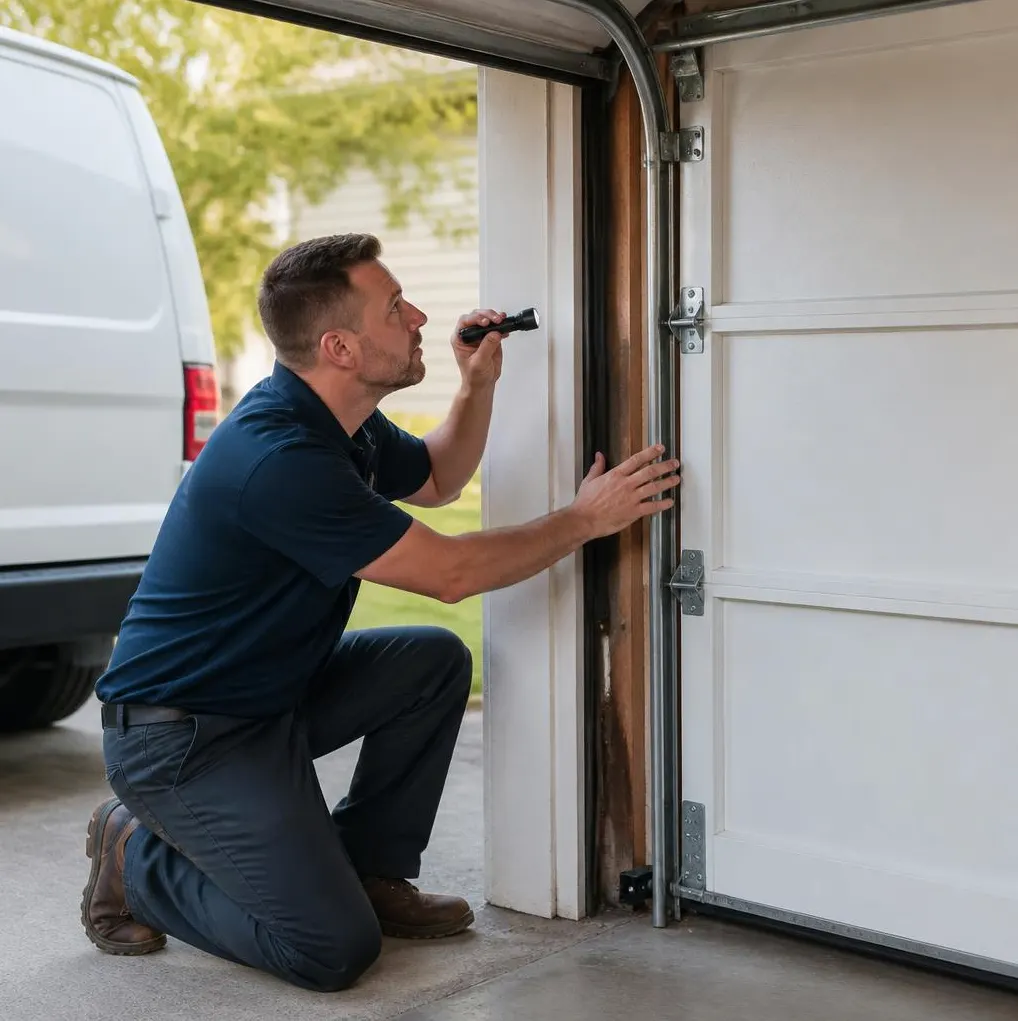
If your door felt unusually heavy during a manual lift, wouldn't stay open on its own, or the opener won't reconnect cleanly after power returns, that's our cue to come out. We handle Garage Door Spring Repair for doors that have lost their balance, and Off Track Door Repair for doors nudged out of alignment during a manual override gone sideways. We'll check the whole system — not just the symptom — so the next outage isn't a repeat problem.
If storm season has you second-guessing your garage door's reliability, call Clearwater Beach Garage Door Pro for same-day service across Clearwater Beach, FL and the surrounding Pinellas County coastline.